How Diagnosis Works
Why AMPLIFIED! diagnoses both organizational adoption and individual capability before action.
Why Diagnosis Comes First
AI initiatives rarely stall because of technology. They stall because action outpaces understanding. When leaders move too quickly, friction is misread as resistance and training or governance is applied before the real constraint is clear.
Diagnosis comes first because sequencing determines outcomes. By identifying what is actually limiting adoption, leaders can act with precision—reducing wasted investment, protecting credibility, and ensuring people are not blamed for systemic misalignment.
The Two Diagnostic Arcs
AMPLIFIED! uses two complementary lenses to diagnose where adoption and capability are actually constrained.
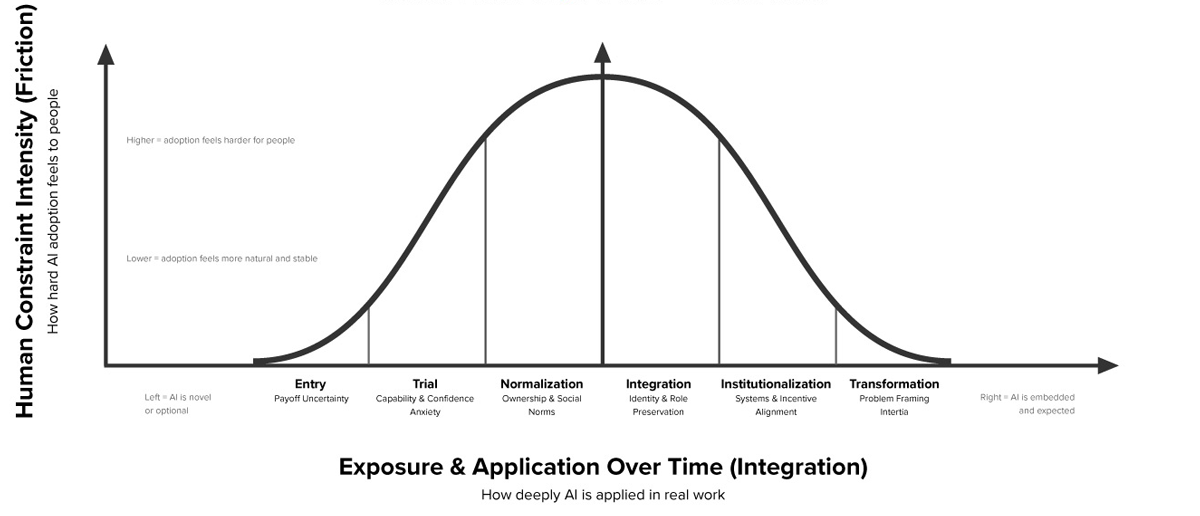
The AI Adoption Arc
The AI Adoption Arc diagnoses where AI adoption becomes hardest for people as it moves into real work. It focuses on human constraint, not maturity, usage volume, or technical readiness.
Why Organizational Diagnosis Isn’t Enough
Clarifying organizational constraints is necessary—but it’s not sufficient. Even when systems, roles, and incentives are aligned, AI adoption can stall if people are being asked to operate beyond their current capacity for judgment.
As AI moves into more consequential and ambiguous work, success depends not just on what the organization enables, but on how individuals interpret, decide, and act under complexity. This is where training alone falls short.
To address this, AMPLIFIED! pairs organizational diagnosis with a second, equally important lens: personal capability.
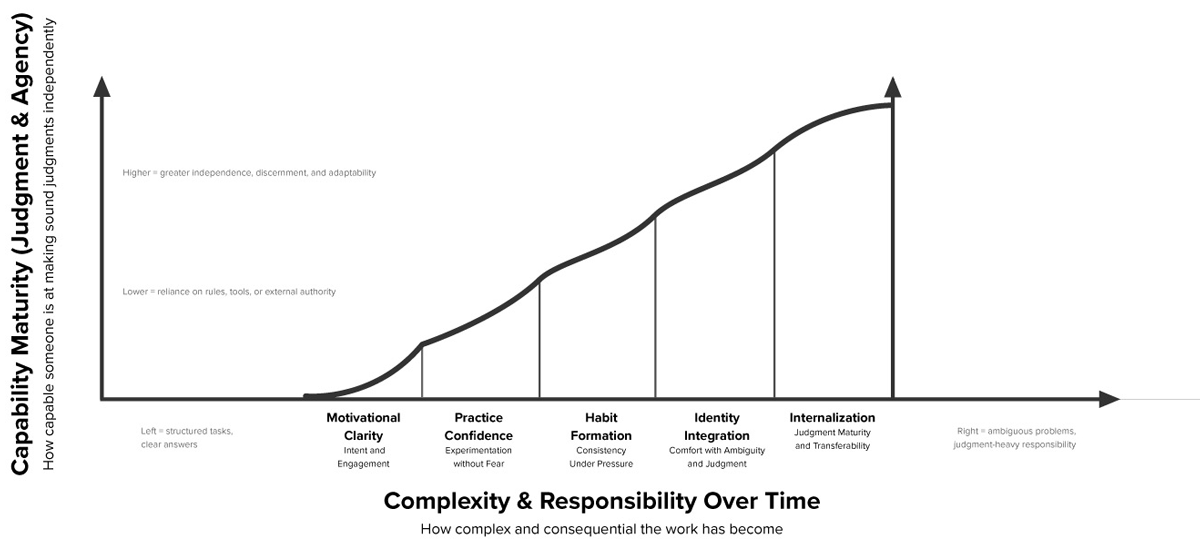
The Personal Capability Arc
The Personal Capability Arc diagnoses whether individuals have the judgment and agency required to operate effectively as work becomes more complex and consequential. It focuses on how capability matures over time—not on skills, performance, or training completion.